What a traditional dhow actually is, where the design comes from, and how a dhow cruise in Dubai Marina compares to a modern cruise boat.
A dhow is a traditional wooden sailing vessel historically used across the Arabian Gulf, the Red Sea and the Indian Ocean for trade, pearl diving and fishing, long before Dubai became the city it is today. The design — a long, narrow wooden hull with a raised bow and stern — dates back centuries and was built for coastal trading routes rather than tourism. Today, dhows built in that traditional style are used as dinner cruise vessels, keeping the wooden exterior while the interior is fitted out with modern seating, air conditioning and dining space.
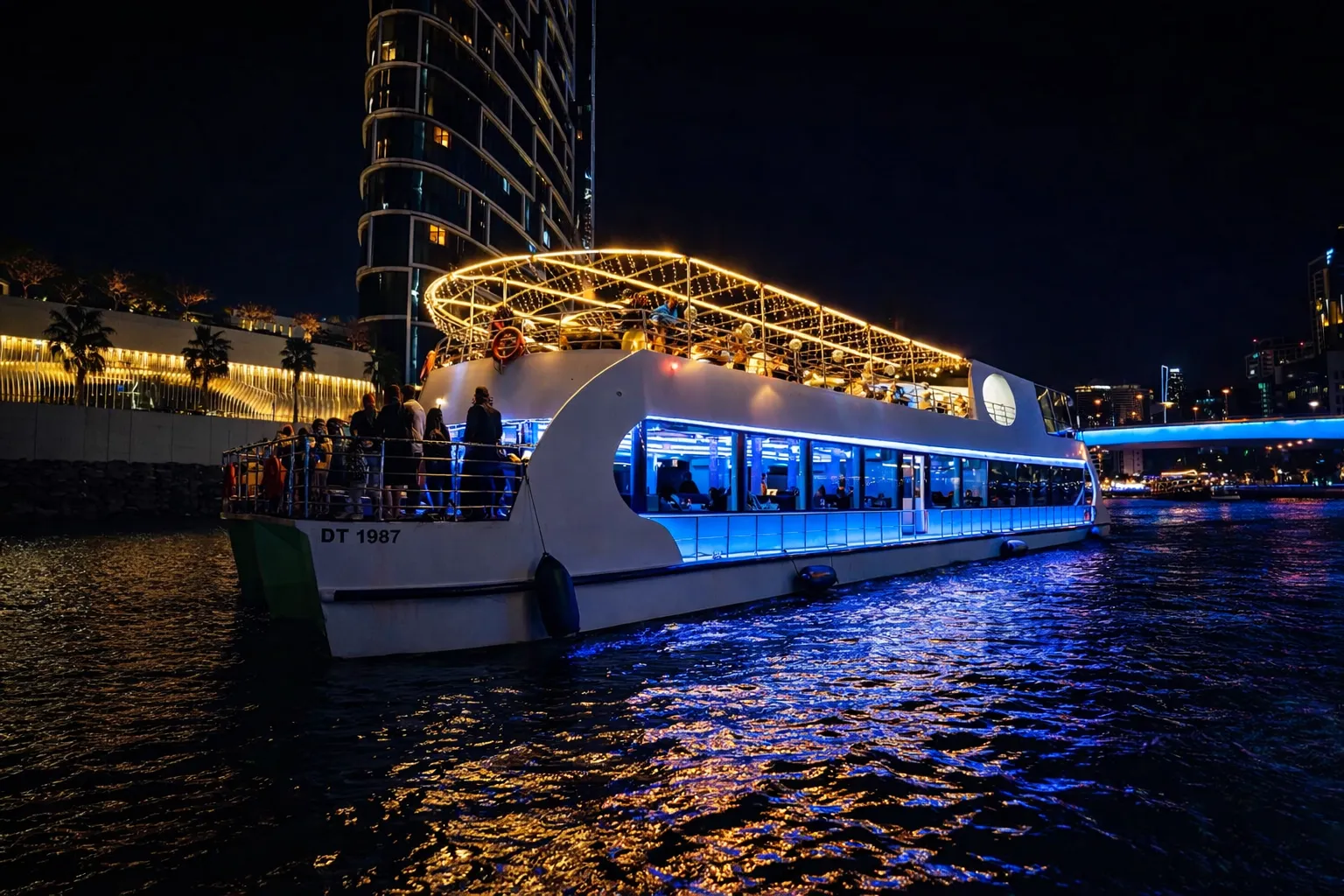
Both sail similar routes through Dubai Marina, but the boats themselves are different. A modern cruise boat is built from steel or fibreglass, often multi-deck with a contemporary interior, and generally larger. A dhow keeps the traditional wooden hull and a more intimate, lower-key atmosphere — smaller capacity, a warmer wood-panelled interior, and decor that leans traditional rather than modern. If the wooden aesthetic and a slightly more traditional feel matters to you, that's the practical difference to know before choosing between the two.
Dhow cruises also operate at Dubai Creek, in the older part of the city — that's a separate experience from a Marina-based dhow cruise, since the surrounding scenery (historic souks vs. modern skyline) is completely different. This guide is specifically about dhow cruises operating out of Dubai Marina.
Structurally, a Marina dhow cruise experience is similar to a standard Marina dinner cruise: an evening sailing, buffet-style dinner, and live entertainment, most commonly a Tanoura (spinning dance) performance or traditional Arabic music. The main difference is atmosphere rather than itinerary — expect a more traditional, low-lit interior with wooden detailing rather than a glossy modern lounge.
A dhow cruise tends to suit visitors who want a more traditional, culturally-flavoured evening rather than a large, high-capacity party boat — couples, smaller groups, and anyone specifically interested in the dhow's history rather than just the skyline views.
Traditional dhows were built without formal blueprints, relying on skilled shipwrights who shaped the wooden hull by eye, plank by plank, using techniques passed down through generations of Gulf boat builders. The wood was traditionally sourced from teak, often imported from India, since it holds up well against saltwater. Modern tourist dhows keep this exterior silhouette — the curved hull, the raised bow — while the below-deck structure is reinforced and fitted for passenger use rather than cargo or fishing.
Boarding a dhow is generally simple — a gangplank or short walkway from the dock — but the deck can be narrower than a modern cruise boat, so it's worth taking boarding slowly, especially in heels. Once seated, most of the evening follows standard dinner-cruise etiquette: help yourself at the buffet when it opens, and expect the entertainment segment partway through rather than continuously.
The wooden interior and warm lighting make for a different photo aesthetic than a modern cruise boat — better suited to close-up, atmospheric shots than wide skyline panoramas. For the skyline itself, the open deck areas (where available) still give a clear view of the Marina towers.
Generally yes — around two hours in the evening is typical, though it varies by operator.
No. Dhow cruises also run at Dubai Creek. This guide covers the Marina-based version specifically, since the surrounding scenery is different.
An Arabian Dhow Cruise offers a relaxing experience with traditional dhow views, Dubai Marina or Creek sightseeing, delicious dining, and stunning views of the city skyline. Depending on the cruise, guests may also enjoy live entertainment and onboard refreshments.
Most modern tourist dhows fit air conditioning into the enclosed interior, even though the exterior keeps its traditional wooden look — worth confirming with the specific operator if it matters to you.